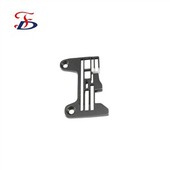
Common fault repair methods of computerized flat car sewing machine
Sudden stop during sewing
Possible cause: The sewing machine has been working at a low speed for a long time, and the machine's overheating may cause the motor power to automatically shut down.
Solution: Turn off the power and wait for 20 minutes, the safety device will restart, and the sewing machine is ready to start working.
No needle
Possible causes: the upper thread is used up; the presser foot is not lowered; the bobbin thread shaft is not in the correct position.
Solution: Replace the empty spool and re-identify the needle; lower the presser foot; press the shuttle spool to the end and return to the left; lower the buttonhole lever.
Sewing machine
Possible causes: the presser foot does not match or the needle hits the presser foot; the needle falls off and jams into the crochet hook.
Solution: Replace the presser foot; remove the needle and install a new needle.
Upper thread broken
Possible reasons: improper threading method; thread knotting; excessive thread tension; needle bending, blunt tip, or blisters; incorrect needle size; improper needle placement; improper needle and thread coordination; initial sewing speed too fast; threading improperly Thread take-up device.
Solution: re-start the thread normally; eliminate knots in the thread; adjust the pressure of the thread clamp; replace the needle; replace the needle of the appropriate size; properly place the needle; change the thread or needle; start the sewing machine at a medium speed; check the thread step.
Bottom thread disconnected
Possible causes: The bobbin is not completely inserted into the bobbin case; the bobbin is entangled with thread; the bobbin does not run smoothly in the bobbin case; there is yarn in the bobbin case or on the bobbin.
Solution: Reload the bobbin into the bobbin case carefully; sort out the bobbin case; check the bobbin for possible damage; clean the bobbin case and the bobbin.
Jumper
Possible causes: excessive thread tension; bent or blunt needle; wrong needle size; improper needle and thread coordination; thread not passed through the thread take-up lever; insufficient pressure of the presser foot; improper needle placement.
Solution: adjust the thread tension; replace the needle; select the appropriate size needle; replace the needle or thread; check the threading steps; increase the pressure of the presser foot; reload the needle.
Unsatisfactory stitch
Possible reasons: the machine thread is not fully pulled into the sensor; the threading method is wrong; the bobbin case has a wrong thread; the size of the spool cap does not match.
Solution: fully pull the machine thread into the sensor; thread the thread correctly; correct the bobbin case outlet; use a spool cap of the same size.
Chaotic stitches
Possible reasons: the needle size is not the same; the threading step is wrong; the thread tension plate is loose; the cloth is pulled strongly; the presser foot is insufficient or completely loose; the bobbin is deformed.
Solution: Choose a needle suitable for thread and fabric; re-thread the machine; tighten the thread clamp; do not pull the fabric but feed the material gently; tighten or reinstall the presser foot; rewind the bobbin.
Fabric wrinkles
Possible reasons: the stitches are too large for a specific fabric; the needle tip is blunt; the thread tension is not appropriate; the presser foot force is not enough; the fabric is too light; the thread diameter or material difference of the upper thread and the bottom thread used is caused.
Solution: Reduce the stitch size; replace the needle; adjust the thread tension; increase the pressure of the presser foot; use a thin material backing paper; use the same quality and the same diameter for the upper thread and the bottom thread.
Twisted wire
Possible cause: The upper thread and the bottom thread have not passed the presser foot; the feeding teeth sink
Solution: press the bottom thread of the upper thread on the presser foot at the same time; raise the feed dog
Broken needle
Possible causes: thin needles are used to sew thick materials; the needle is not installed sufficiently; the needle fastening gong is loose; the presser foot is not selected properly; the presser foot is loose. Solution: Replace the appropriate needle; reinstall the needle; tighten the needle to fix the gong wire; select a suitable presser foot; reinstall the presser foot.
Excessive noise, rattling, machine crashing
Possible causes: debris is stuffing the feeding teeth; there is yarn on the tip of the shuttle; the thread is wrapped around the shuttle.
Solution: clean the machine; disassemble the machine and clean the shuttle.
The machine does not feed
Possible reasons: set the stitch length to 0; the presser foot is too loose; the feed dog position is too low; the fabric is knotted under the thread.
Solution: reset the appropriate stitch pattern and length; adjust the presser foot pressure to "normal"; raise the feed dog; put the double thread under the presser foot before sewing.
The needle cannot be threaded, the threader does not move, or the thread hook cannot enter the eye of the needle
Possible reasons: the needle is not in the highest position; the self-protection of the needle recognition device when the needle is not in place; the needle is not fully installed in place.
Solution: Rotate the hand wheel until the needle reaches the highest position; fully insert the needle.
The threader does not return to its position, the sewing machine stops or the threading hook is stuck in the eye
Possible cause: The sewing machine moves unexpectedly while the threading hook is still in the eye of the needle.
Solution: slightly move the handwheel clockwise and take out the thread hook.
How to clean and maintain the flat car sewing machine
Cleaning method
1. Cleaning the feed dog: remove the screw between the needle plate and the feed dog, remove the cloth lint and dust, and add a small amount of sewing machine oil.
2. Remove dirt and add a small amount of sewing machine oil.
3. Cleaning of other parts: The surface of the sewing machine and all parts in the panel should be cleaned frequently and kept clean. Lubrication method Lubrication parts: each oil hole on the machine head, lubricate the upper shaft and the parts connected to the upper shaft; the parts in the panel and the movable parts connected to each part; lubricate the presser foot bar, the needle bar and the parts connected to it; Wipe the movable parts of the lower part of the board and add less oil. Must use special sewing machine oil. The sewing machine should be fully oiled after one day or several days of continuous use. If oil is added between uses, the machine should be left idling for a period of time to fully soak the oil and shake off the excess oil, and then use a clean soft cloth to cover the machine head Wipe clean with the countertop to avoid soiling the sewing material. Then thread the rags and use the movement of the sewing thread to wipe off the excess oil stains until there are no oil stains on the rags, and then proceed to formal sewing.
Maintenance
1. After the work is completed, insert the needle into the needle hole plate, raise the presser foot, and cover the machine head with a machine cover to prevent dust intrusion.
2. When starting to work, first check the main parts, how light and heavy it is when you step on it, whether there is a special sound, whether the needle is normal, etc. If any abnormality is found, it should be repaired in time.
3. After the machine has been used for a long time, a major repair should be carried out. If a worn-out part is found, a new one should be replaced.
4. After the work is finished, insert the machine needle into the needle hole plate, raise the presser foot, and cover the machine head with the machine cover to prevent the intrusion of dust.