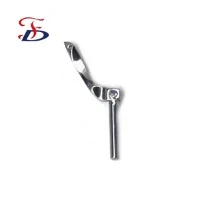
1. Wrapping strip presser foot. Using the wrapping strip presser foot can easily sew the wrapping strips with a width of less than 7mm on the selvage;
2. Button presser foot. The starting position of the button presser foot should correspond to the starting mark of the button on the fabric;
3. Zipper presser foot. It is used for ordinary zipper sewing, and can also be used for inlay sewing;
4. Ordinary crimping presser foot. Suitable for light fabrics;
5. Embedded thread presser foot. Also known as covered thread presser foot, it is usually used for decorative sewing of embedded threads;
6. Overlock presser foot. The overlock presser foot is used to assist the overlock operation of the fabric;
7. Jacquard presser foot. Used for sewing decorative fabrics, tassels or others;
8. Synchronous presser foot. The walking foot is a very useful presser foot that can be used to keep layers of striped plaid in line;
9. Roller presser foot. It is suitable for sewing fragile, smooth or sticky fabrics, such as velvet, plastic, leather or other similar fabrics, and it can also prevent elastic fabrics from being stretched and causing unsightly sewing;
10. Circular pattern presser foot. It is used to sew various circular patterns, and it can overseam circular patterns with different sizes and the same center;
11. Invisible zipper presser foot. This kind of zipper attachment completely suppresses the zipper, and the trace of the zipper cannot be seen from the front after sewing;
12. Center straight presser foot. Use the center straight line presser foot to sew delicate straight lines, generally used for sewing thin or ultra-thin and elastic fabrics. Its flat bottom helps flatten the fabric and prevents it from wrinkling or skipped stitches;
13. How to use the bead string presser foot. It is convenient to sew the beads on the clothes for decoration, and the diameter of the beads needs to be less than 4 mm;
14. Free embroidery presser foot. For darning, embroidery, free motion quilting. The presser foot will rise and fall with the needle, the fabric can move when the presser foot rises, and the fabric can be flattened when the presser foot is lowered, so that the stitches can be formed.

Sewing machine presser foot
Jun 15, 2023
Leave a message
You Might Also Like