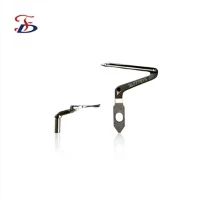
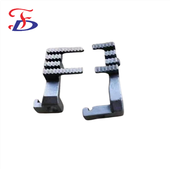
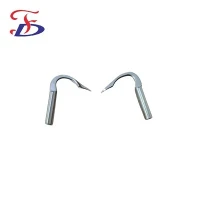
1. The sewing material is wrinkled: the needle of the sewing machine is broken, the tension of the bottom thread is too large, and the differential mechanism is not adjusted properly. Solution: Replace the sewing machine needle with a new one, loosen the bobbin spring screw, and readjust the differential mechanism.
2. The underside of the sewing material is "gnawed" to form grid marks: the feeding teeth are too sharp, and the pressure of the presser foot is too high. Treatment method: Use oil stone to grind the tip of the cloth feeding tooth, and loosen the pressure adjusting screw of the presser foot.
3. There is thread hair under the sewing material, and there is a sound of interrupting fibers during sewing: the sewing machine needle is broken or too blunt. Solution: Replace the sewing machine needle with a new one.
4. The sewing material is stagnant: the cloth feed dog is too low, and the pressure of the presser foot is too high. Treatment method: Raise the feed dog and tighten the pressure adjusting screw.
5. The sewing material goes back and forth: the cloth feed dog is too high. Solution: adjust the feed dog.
6. The sewing material cannot be sewed backwards: the cloth feeding cam shifts. Solution: Adjust the position of the feed cam.
7. The sewing material is irregularly slanted: the cloth feeding tooth is crooked or the cloth feeding tooth screw is loose. Solution: Correct the feed dog and tighten the feed dog screw.
These performances are all specific performances of sewing machine feeding.